There’s a lot of native pride for peers in the New York State literary community…Carina Imbornone & Ira Silverberg’s Life@LitNYS

The great majority of the nation’s literary arts organizations call New York home, and the LitNYS network was built to ensure they not only survive but thrive. We are guided by the principle that connecting people, pooling resources, and sharing knowledge and passion strengthens us all. We’ve built strategic partnerships, allocated funds, convened annually, and cultivated relationships across the LitNYS member network. In Life@LitNYS, we continue our tradition of showcasing the stories of leaders whose work makes New York State a beacon for the literary community and beyond. In this series, we explore the intra-network relationships forged by mentor-mentee pairs in the LitNYS Mentoring Program.
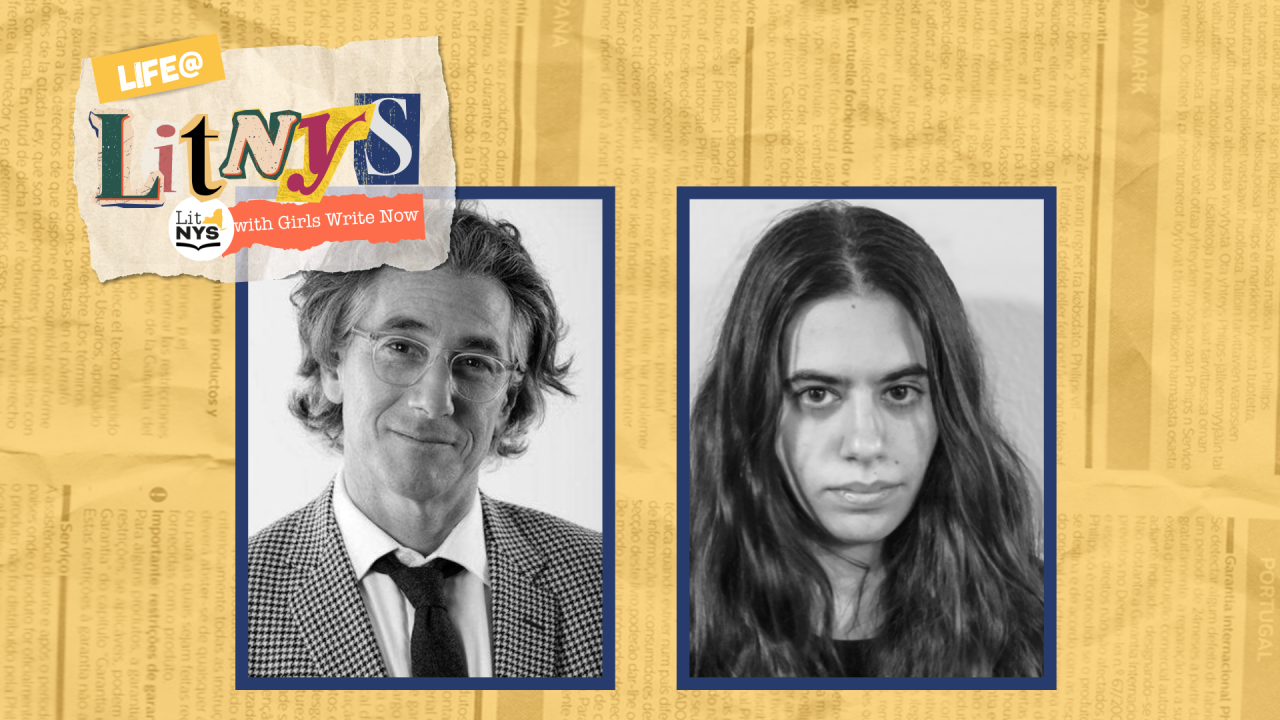
In this issue of Life@LitNYS, we hear from literary agent, non-profit consultant, and literary Renaissance Man, Ira Silverberg, and Carina Imbornone, writer and business manager of The Drift, a magazine of culture, politics, and literature.
For the last two years, Ira and Carina have been working together in the LitNYS Mentoring Program. Where Ira’s stature among New York State’s literary greats provides a sharp eye for strategy, networking, and advancing the legacy of the New York State literary ecosystem, Carina’s early-career savvy brings new voices into the fold and a sharp instinct for navigating the evolving business of literary publishing.
For those just starting out, the work can feel like a behemoth task—but Ira and Carina model a deep commitment to operations that never comes at the expense of readers or community. It’s a value that runs through both Ira’s mentorship and Carina’s organizational mission at The Drift. Together, they show us how liberatory a literary life can be, and share the daily practices they keep to “Stay Sane.”
Tell us about your Life@LitNYS
Ira: LitNYS has led to deeper connections with both organizations and members of our community. The most profound being, that my work with Herstory Writers Network (HWN) inspired me to enroll in their facilitator training. The training, essentially the same course as those who enroll in the workshops they offer to disenfranchised communities, forged deep connections amongst the cohort and with HWN. Many of us continue an affiliation with the organization whose good work I brought to the attention of another client in California. We formed a collaboration that brought the HWN Workshop to the largest women’s prison in the U.S., the California Correctional Facility for Women in Chowchilla CA. I led a workshop in a maximum security unit where some of the women I worked with had spent upwards of fifty years. The experience altered my consciousness and allowed some of the women to unearth life events that had been buried for decades. Thanks to LitNYS, I had one of the most moving experiences I’ve ever had in my work life.
Carina: I found out about LitNYS through my job at The Drift, a magazine of culture, politics, and literature. I live in Queens, and I feel blessed to engage with other readers and writers in New York City through the organization. Getting to know Ira has been the best part of joining LitNYS—I’m endlessly curious about his deep well of knowledge and lived experience in the writing world, and I’m so grateful for every conversation we’ve had.
Tell us about your mentorship. How long have you been working together? What kinds of projects are you working on?
Ira: This is my second year with The Drift. I’ve been through some formative events in their evolution—moving from Fiscal Agency to becoming a 501C-3; and starting their first Board. It’s been beautiful to see how inquisitive, adaptive, and professional everyone is. That doesn’t always happen…
Carina: Ira and I have been in touch since late 2024. He’s been an incredible mentor across all aspects of the publishing world and a treasured storyteller of New York letters. He’s provided guidance on navigating local and national grants, running a nonprofit, and engaging with readers.
What have you learned from each other that you couldn’t have elsewhere?
Ira: Aside from their editorial prowess and extraordinary commitment to an editing process unlike any other journal’s, I’ve seen a deep level of commitment to fundraising, finding the right collaborators in that endeavor, and maintaining deep relationships with donors in an often fickle funding landscape. It is never at the expense of readers or their larger community. Witnessing the finesse involved in maintaining that balance is something I’ve learned from.
Carina: I’ve learned so much from Ira—especially how to navigate the organizations in New York that help literary arts nonprofits, like CLMP and NYSCA. He’s also taught me the history of how these organizations—and the larger arts nonprofit landscape—came to be, and shared insights on the grants we might be eligible for, the folks who serve as grantmakers, and the other nuts and bolts of running an arts nonprofit.
What about doing your work gets you up in the morning?
Ira: Being able to help small organizations, especially those just starting out, who can’t afford consultants—or even much staff—is a genuinely gratifying activity. Knowing I have a call or a meeting with a mentee in this program usually means it’s going to be a good day.
Carina: There is always something to be curious about, and always something new to read.
What’s your superpower? How does that inform the work you do within LitNYS?
Ira: My superpower is love. Whether it’s for my partner, feeling the embrace of mother nature when I sit in my yard, or the love I have for the writer whose work has moved me. Within LitNYS, I’m surrounded by people who genuinely love what they do. When I connect with a person of passion in the field, we can speak the same language, and it makes work easier. If I can help someone to connect to theirs, if they haven’t yet found it, we then have the common language to be able to move forward more easily.
Carina: Making it a practice to read as much as possible from as many different magazines as possible. Engaging with the work of others is the project at hand!
Coffee or tea?
Ira: Coffee. Need you ask?
Carina: Coffee.
When you were a kid, what did you want to be when you grew up?
Ira: A civil rights lawyer. And I would have been one if I hadn’t fallen in love with the man who introduced the possibility that one can have a life working in the arts. I dropped out of a six-year BA/JD at CCNY/New York Law School (the precursor of the CUNY Law School) to move to Kansas. He worked for William Burroughs, the paterfamilias of my Queer family. That law career was doomed.
Carina: This question sort of troubles me because as far as I can remember, I did not have any idea of what I wanted to be as a small child. Maybe a submarine explorer. When I was a little older, as a younger teen, I discovered The New Yorker, and became fascinated with magazine writing.
What was the last book that made you laugh out loud?
Ira: Wayne Koestenbaum’s latest novel, My Lover, the Rabbi.
Carina: The Babysitter at Rest by Jen George—I love that book!
What’s a nostalgic scent or song for you? Why?
Ira: Dior’s Eau Sauvage seemed so chic when I was in junior high school. It reeked of aspirations to get into Studi054 and fit in size 27 Fiorucci jeans. I gave up wearing any intentional scent, aside from essential oils, at times, years ago.
Carina: The waxy smell of disintegrating polyurethane and old leather that can be found inside an old car.
Do you have a favorite national park or green space?
Carina: I’ve been on a roadtrip these past couple weeks through Arizona, southern Utah, Nevada, and California. I love the desert Southwest, especially where the Colorado Plateau changes into the Mojave desert. Massive rock formations yield to hot, flat desert. I love the sun!

What role do your organizations play in the LitNYS community at large?
Ira: Each organization I’ve worked with in this program—Nightboat, The Drift, Ugly Duckling, Gold Coast Forum, Herstory Writers Network, and most literary arts organizations—play a unique role in the landscape. Their editorial direction, community outreach, fundraising efforts, among other aspects, are specific to their unique missions. And some are more active than others in terms of community involvement, which is what makes the annual convening so great. Organizations are inspired there to find their place in our ecosystem. It’s wonderful to see that unfold.
Carina: The Drift is a triannual magazine that publishes essays, interviews, fiction, and poetry dedicated to discovering, nurturing, and championing emerging literary talent. We publish ambitious work by young writers, and provide best-in-class editing and exposure that leads directly to other commissions, representation, book deals, and prizes. We are also building a diverse and vibrant literary community through our online footprint and in-person events.
What makes the New York State literary community special to you?
Ira: We, who are natives of the state, have seen global capitalism make it hard for small arts orgs to hire people at competitive salaries, find affordable office space, etc. Those who figure it out are some of the strongest, mission-driven orgs one will ever encounter. So, there’s a lot of native pride.
Carina: I don’t think any other U.S. state contains such extremes of urban and rural living, or has such strong arts representation of both poles. I grew up on the North Shore of Massachusetts, so I’m not a native, but I’ve lived in New York for the past six years.
Who are some New York State-based writers/organizers who give you hope for the field, or who you might consider mentors at large?
Ira: Betsy Sussler, the founder of BOMB Magazine, is someone I met in their early days—before I was even working in publishing. I’ve watched her, over BOMB’s 45 years, maintain a steadfast commitment to her organization, and its mission of highlighting the most interesting, challenging, and diverse group of artists and writers from around the world working in different forms, in what has become a home in print from both emerging and established artists. She’s been working her ass off for decades and it has paid off for BOMB. But where she, of late, has really provided me with inspiration, is in seeing all the good reviews, and so many old friends celebrating her at events for the publication of her first novel, Station of the Birds (Spuyten Duyvil Press). In a youth-obsessed publishing culture, it warms my heart when I see a debut from a 78 year-old writer—especially one I’ve known, and loved, for more than 40 years.
Carina: I’m inspired by all my peers at The Drift, and across the New York little magazine community. The special projects that NYRA pulls off are so cool—like a print-only guide to New York, or a dedicated Los Angeles issue. I like how they play with the norms of what a magazine can or should be while staying true to their editorial voice. I’m a fan of magazines that encourage lay writers experiment with specialist topics; it’s fun and it often lets writers blend modes that otherwise wouldn’t be allowed. I also really admire Equator’s perspective of the world beyond the locus of the West. Both magazines have such instantly recognizable art direction, too.
What’s a resource for New York State-based writers/organizers that you think everyone should know about?
Ira: CLMP for Publishers; PEN America, Poets & Writers for writers; and the National Book Foundation for everyone as they set the tone for who we are as a literary culture.
Carina: NYSCA’s funding for arts organizations, CLMP.
Is there a writing exercise, strategy, or helpful tip that you picked up from your peer that you haven’t been able to stop doing?
Ira: If there was, I’d be further along with the book I’m not writing!
Carina: Lock your phone in your mailbox and write at least 300 words a day.
Who inspires you?
Ira: Living: Barbara Epler, Publisher of New Directions; Ruby Lerner, Founder of Creative Capital; Lisa Willis, ED of Cave Canem
Dead: Allen Ginsberg, whose centenary celebrations begin this year; Bayard Rustin, the brilliant socialist, civil rights activist who is too frequently written off for having been closeted by people who have no idea what it’s like to live in one; Jean Genet, the ultimate literary outlaw whose support for the people of Palestine was early, heard internationally, and is a role model for not giving a shit what the establishment thinks.
Carina: Werner Herzog. His movies are so genuinely curious about what makes a person a person, and he’s gotten to play with so many different ways of seeing and filmmaking over his decades. His voice is his own even when it’s indeterminately fact or fiction. And he gets to cover the ground between journalism and experimental work; I’m drawn to art that is anti-category.
The theme for our last Convening was “Leading in a Liminal Season: Strategies for Staying Sane”—what’s something you do every day to stay the course through turbulent times?
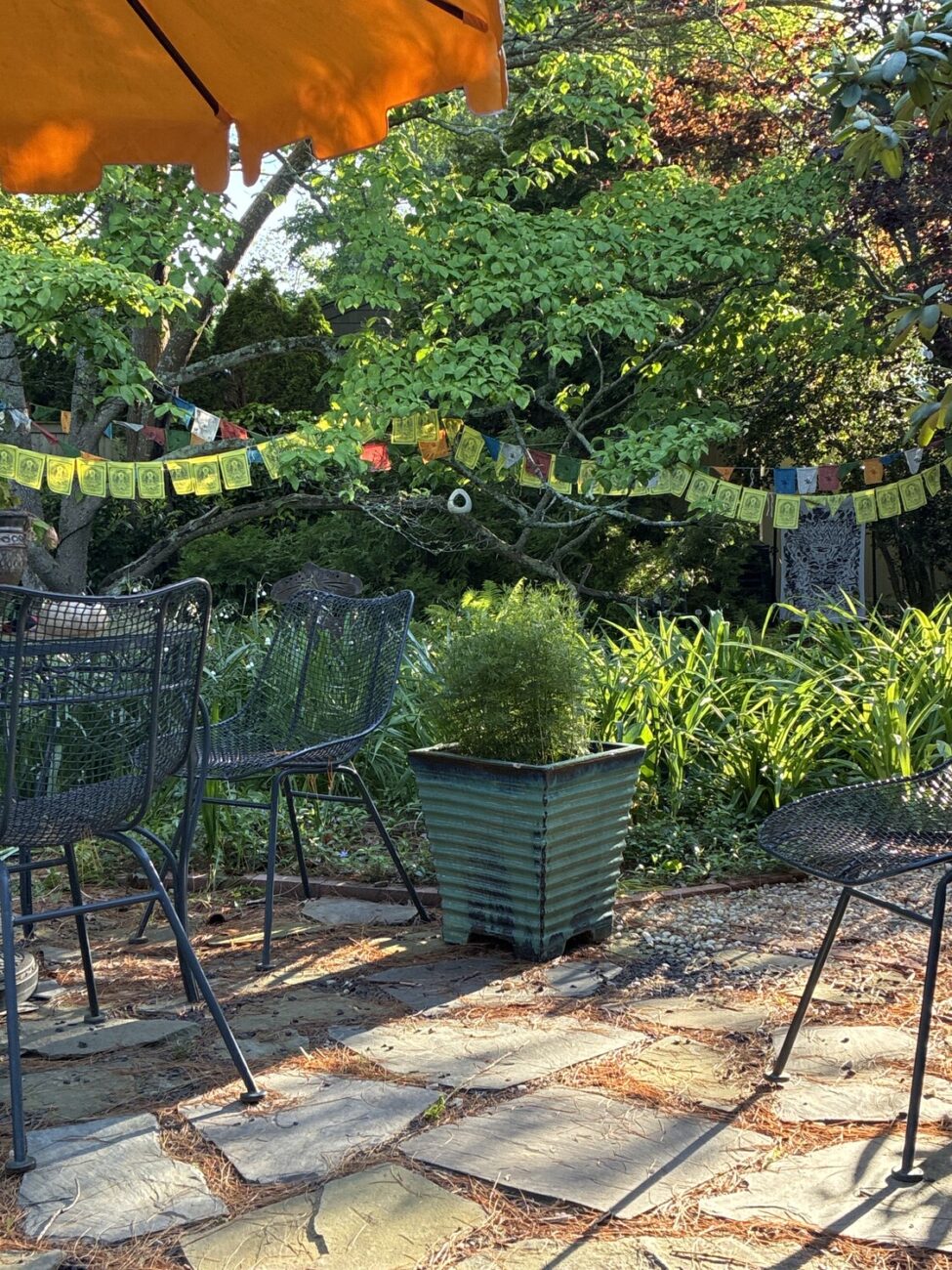
Ira: I find refuge in natural beauty—working in my garden where seasonal changes keep me in tune with the world around me in a different way than the newspaper does. One of the few things I appreciate about living on Long Island is access to it. As I work at home, when things get rough, I leave the house. On a particularly bad workday, I excused myself from a call with a client. I walked to the end of the street—it dead ends on wetlands and the Great South Bay and looked up to see an Osprey teaching her chicks to fly. I was much nicer when I picked up the conversation later that day. I try to start my day with a walk to the end of the block, or a quiet moment in the garden taking in what’s new and the evolution of the space.
Carina: I take great solace in knowing that there is very little I can change about the world, so I must try my best every day to focus my efforts as narrowly as possible. For me, that focus on reading, writing, and helping to support our local literary community is how I hope to leave the world in an ever-so-slightly better place. Getting out of my apartment and out in the remoteness of nature once or twice a year—as I’m doing now—also brings a deep sense of peace.