The Decision Underneath
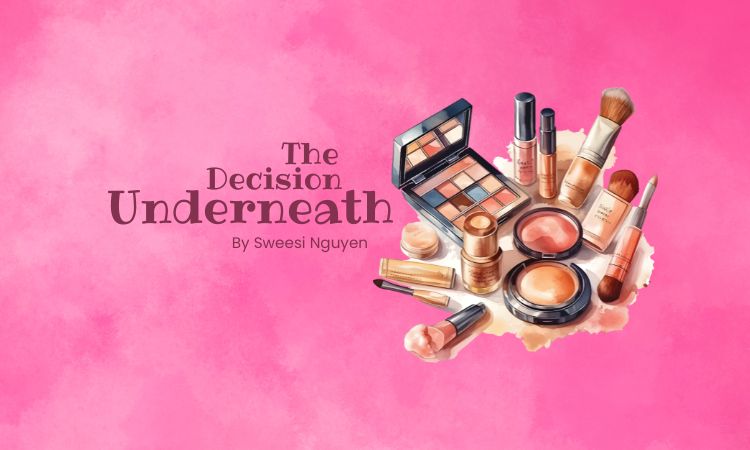

The first time I wore lipstick in public, I was 19 years old and standing in the CVS on Kingwood Drive at 11pm, convinced no one I knew would be there. Dusty rose, $4.99, the kind of pink that looks almost accidental. I paid for it with exact change so the transaction would be faster. I walked to my car, sat in the parking lot, and put it on in the rearview mirror. Then I wiped it off before I went home.
I had been practicing in private for years. In Vietnam, then in Houston, in the bedroom I shared with the version of myself my family thought I was. My family told me to speak louder, sit differently, stop looking at the fashion magazines. I obeyed in public. In private I read every issue I could find. I studied the way fabric moved, the way color changed a face, the way a woman in a runway photo could look like she owned every inch of the room she stood in. I wanted to understand how that worked. I told myself it was curiosity. It was not just curiosity.
When I started college at Lone Star, I found a TikTok caption about Japanese teenagers spending $500 a month to make themselves deliberately ugly. I did what I always do when something stops me cold: I went to the academic databases. I found Gyaru, a subculture built on defiance, girls bleaching their hair and darkening their skin specifically to reject Japanese beauty standards that told them to stay pale, stay quiet, stay small. The media called them shallow. I recognized something in them immediately. Not the aesthetic, but the decision underneath it. The decision to refuse
That research became my honors thesis. Then it became UNIGLOW, the digital magazine I founded and run, which publishes issues on cultural beauty practices from Jirai Kei to 1920s flapper aesthetics to the Clean Girl trend. I translate Japanese articles, read ethnographies, watch street interviews, and work with an illustrator to dress our anime character in each culture’s visual language. Every issue is an argument that beauty is not shallow. That what people choose to put on their bodies is a form of speech, sometimes the only form available to them.
I know something about that. For a long time, the only place I could be honest about who I was was in the research. In the analysis of other people’s rebellions. It took me longer to understand that I was also writing about my own.
am a transgender woman.
I have known this for most of my life and said it out loud for much less of it. The dysphoria is real and some days it is loud and some days I manage it by doing the thing I have always done, which is make something. A magazine. A workshop for LGBTQ+ students on campus who have nowhere else to go. A scholarship essay. A piece of writing for a literary class where the assignment is simply to write what matters.
What matters is that I am still here. That I keep making things. That somewhere ahead of me there is a version of myself who is not hiding anything, who walks into a room and stays, who does not wipe off the lipstick before she goes home.
I am writing toward her. I think that is what all of this has been.