“Transformation is not always about becoming someone new, but about returning to ourselves…” Dhayana Alejandrina’s Life@GWN
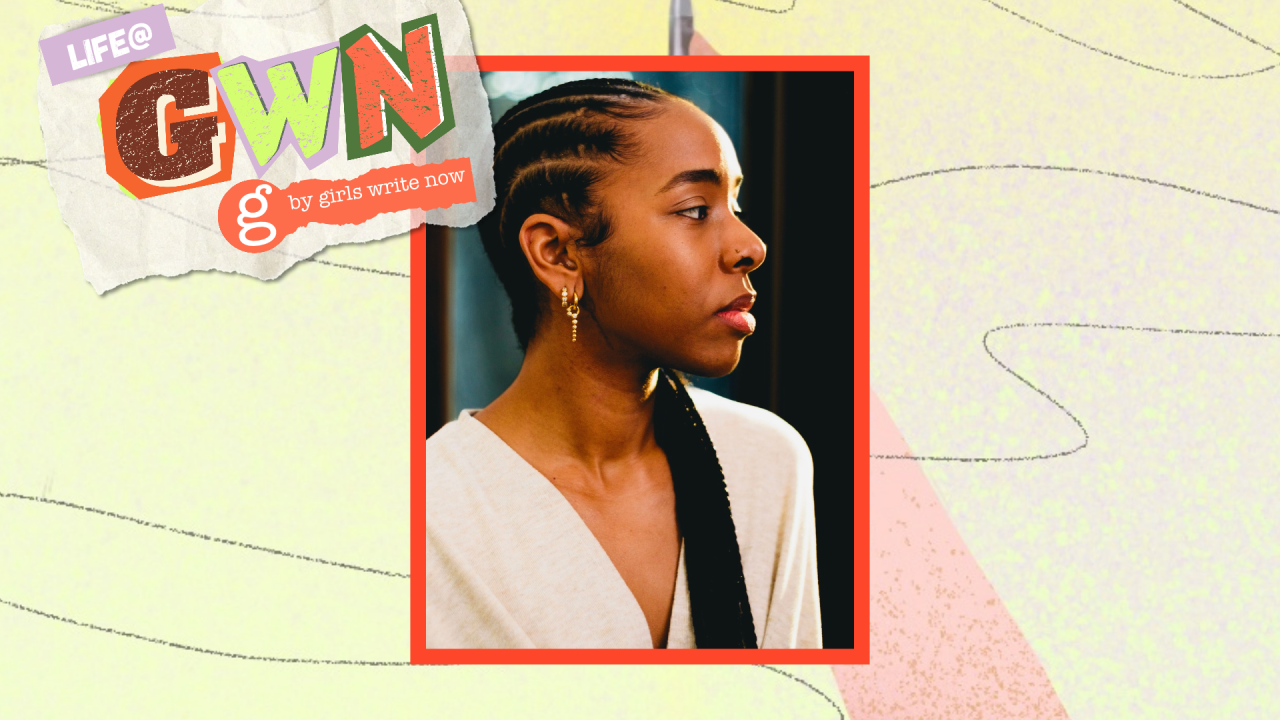

Girls Write Now mentor Dhayana Alejandrina began keeping a diary at age nine in Santo Domingo, Dominican Republic. After she immigrated to the United States in 2009, that small creative act helped her process the transition and became a writing practice rooted in self-acceptance, discovery, and preservation.
Dhayana has mentored writers for more than six years, and her work is close to our hearts at Girls Write Now. She is the author of Agridulce: Poetry and Prose and the editor of Creative Stillness: An Anthology of Poetry and Essays by the Creative Writing Hour. She is also the founder of The Creative Writing Hour, a global community of more than 300 writers and creatives. Through writing, mentorship, creative strategy, and literary programming, she creates spaces where people feel supported in their creative journeys and empowered to share their stories authentically. The product of her dedication is documented in the recent anthology featuring 26 contributors and bringing together poetry and essays exploring cultural memory, identity, grief, joy, healing, mental health, and our evolving relationships with creativity.
Her work is grounded in the belief that storytelling is a practice of restoration, connection, and cultural preservation. Whether developing creative initiatives, nurturing emerging voices, or building community, Dhayana seeks to help people recognize the value of their experiences and the power of their stories—and, in turn, to preserve stories and create opportunities for voices that have too often gone unheard.
Tell us about your Life@GWN.
I’m Dhayana Alejandrina, a Dominican poet, author, creative writing mentor, strategist, and community builder. My literary journey began at the age of nine in Santo Domingo, Dominican Republic. After I immigrated to the United States in 2009, writing became a way for me to navigate questions of culture, identity, faith, language, and belonging while remaining connected to where I come from.
I first joined Girls Write Now after learning about its mentorship program and feeling called to become a mentor. Girls Write Now was an organization I had long admired and wanted to contribute to in a meaningful way. I began as a writing and poetry mentor, supporting mentees in developing their craft, and continued offering guidance to others who had questions or needed an extra set of eyes on their work.
My journey with Girls Write Now has since grown, and I was invited to serve as a Journey Facilitator for the Poetry Rising Journey. I’m incredibly proud of the community of mentors and mentees who have helped shape this experience. I’m especially excited about the upcoming zine, Cultural Fragments, which reflects the creativity, voices, and collaborative spirit of the journey. It has been a privilege to contribute to this work and witness what we can create together.
What about that work gets you up in the morning?
What gets me up in the morning is knowing that the work I do can help someone feel seen, find connection, or reconnect with a part of themselves they may have neglected. Writing began as a way for me to make sense of my own experiences, particularly after immigrating to the United States. Over time, that personal practice evolved into a deeper commitment to helping others explore their stories and find meaning through creativity.
I’m especially inspired by what happens when people are given the space, encouragement, and resources to express themselves without fear of judgment or the pressure to be perfect. Through The Creative Writing Hour, mentorship at Girls Write Now, and collaborative projects, I get to witness people build confidence, discover new possibilities, and recognize that their voices matter.
What is it about the Girls Write Now work environment that you find so special?
One of the things I find most special about Girls Write Now is its professionalism and unwavering commitment to creating an environment rooted in safety, respect, and advocacy for everyone, regardless of age or background. It is truly admirable, and even when I think about my own writing community, I look to Girls Write Now as an organization to learn from and aspire toward.
Throughout my mentorship at Girls Write Now, I have consistently felt supported, welcomed, and valued. There is a genuine sense of shared purpose among the people who make this organization what it is, reflected in the love, pride, and kindness they bring to the work. I feel grateful to be part of an organization that not only champions young writers, but also models what a caring, inclusive, and empowering creative community can look like.
What’s your superpower? How does that inform the work you do at Girls Write Now?
The more I grow, the more I realize that my superpower is my vulnerability and patience. I’m grateful to the people who have reflected that back to me, because it has helped me understand just how much these qualities shape the way I show up for others. When you work with people to help them tell their stories, you have to lead with a certain level of humanness, compassion, and heart. You have to be willing to listen without judgment, make room for discomfort, and understand that everyone moves through their stories at their own pace. At Girls Write Now, this informs the way I approach mentorship and creative work: with patience, empathy, and a deep respect for each person’s lived experience.
The theme for our 2026 anthology is “Metamorphosis.” How has writing changed you?
Writing has truly cracked me open, teaching me to be honest, present, and human on the page. After immigrating to the United States, writing became a mirror for my experiences, from navigating the shift between Spanish and English to understanding my evolving relationship with identity, culture, and belonging. Over time, I learned to distinguish the voice I thought I was supposed to have from the voice that was authentically mine.
I’ve learned that it is possible to lie on the page, too—to hide behind beautiful language or tell the version of a story that feels safest. But growth requires us to face every part of ourselves, the beautiful and the uncomfortable, and recognize how those parts shape our values, beliefs, and capacity to love and accept others.
Writing has been its own metamorphosis, teaching me that transformation is not always about becoming someone new, but about returning to ourselves with greater honesty and compassion.
Tell us about your recent anthology. What inspired it?
The inspiration came from my own experience of feeling disconnected from my creativity while navigating expectations, productivity, and the pressure to always be doing more. I began to question whether what we often call writer’s block might sometimes be an invitation to pause, listen, and reconnect with ourselves. That idea became what I call creative stillness—the understanding that rest is not the opposite of creativity, but can be an essential part of it.
How has mentorship impacted your writing practice?
Mentorship has taught me that writing is not a solitary practice, even when we find ourselves alone on the page. As a mentor with more than six years of experience, I’ve learned as much from the writers I support as I hope they’ve learned from me. Their questions, experiences, and willingness to be vulnerable continually challenge me to approach my own writing with greater curiosity, honesty, and compassion.
Mentorship has also deepened my understanding of the legacy we leave through our creative work and the fullness of our humanness. It reminds me that beyond craft and technique, writers need spaces where they feel seen, supported, and encouraged to explore their voices without fear of judgment or perfectionism. That belief informs both my writing practice and my work as the founder of The Creative Writing Hour.
We are not simply helping one another finish our work; we are creating the conditions for one another to keep becoming.
What’s your biggest fear?
My biggest fear is losing the joy and vulnerability I carried as a child to a world that often teaches us to harden in order to survive. Growth has forced me to confront the ways I’ve abandoned my own truth and silenced parts of myself to belong, to avoid hurting others, or simply to make it through. I’ve learned that these adaptations can slowly distance us from ourselves, layer by layer, until we struggle to recognize the person underneath.
What did creating this anthology teach you about yourself or the world?
This question makes my heart tender because this anthology was something I never imagined I would curate. After winning a publishing grant from Gatekeeper Press, I had to sit with how much The Creative Writing Hour, a community I started two years ago, had grown into something that no longer felt like mine alone, but a reflection of the more than 300 writers who give it life.
I felt honored to dedicate the grant to an anthology that reframes writer’s block and creates opportunities for our members to be published, many for the very first time. Curating it alongside Sabrina and Nitika, two dear friends and members of the community, made the experience even more meaningful. Their devotion reminded me of the intention required to carry someone else’s words and present their stories with love, respect, and dignity.
This experience deepened my understanding of what it truly means to honor community. It is not simply about creating a space for people to gather; it is about taking responsibility for the stories entrusted to you. It also brought into focus how many writers of color continue to lack the publishing opportunities and platforms they deserve. I left this experience with a renewed commitment to creating those opportunities, nurturing emerging voices, and helping build a literary world where more writers have the chance to share their work on their own terms.
If you could teach a class in something at which you excel, what would that be?
I would teach a class on writing from a place of presence, with a particular focus on patience: patience with our voices, our stories, and the experiences that shape us.
What was the best advice you ever received? Have you been able to pass it on?
The best advice I ever received came from my dad: “Remember the water in rivers: when it encounters an obstacle, it changes its shape and finds a way forward. So, too, must you learn to flow, not force. Everything, no matter how difficult it may seem, carries a solution within it. And you are never alone.”
Aside from necessities, what one thing could you not go a day without?
I can’t go a day without music. I usually start my mornings with some of my favorite Sunday Service Choir songs before moving on to 2000s bangers. Music helps me release, express, and process whatever I’m feeling. Whether I need to feel grounded, lift my mood, or simply dance around, there’s always a song for it.
What’s something you’re proud of?
I’m proud of the honesty I’ve been practicing over the past few weeks regarding hard topics in my life. I’m learning that honesty isn’t about being heartless; it’s about having the courage to speak from the heart, even when it’s difficult to be sure of where the truth may lead you. I’m proud of learning to honor my truth while making room for others to do the same.
Coffee or tea?
Coffee, certainly, although I do enjoy tea, too. Coffee holds a special place in my heart because it reminds me of growing up in the Dominican Republic, watching my mother and grandmothers make it in a greca, which held many stories of its own. Time for cafecito created space for conversation, laughter, rest, and the kind of everyday moments that become cherished memories. To this day, coffee feels like a piece of home, a connection to my roots.