“Translating the Language of the Unheard…” Sidney Madden’s Life@GWN

In the 2026 Spring Cycle of the Girls Write Now Collaboratory, mentees in the Art of the Profile Journey learned the nuts and bolts of journalism, feature writing, and interviewing from Girls Write Now teaching artist and award-winning broadcaster, podcast producer, and narrative executive Christabel Nsiah-Buadi. To put their new tools to the test, they submitted a profile of a member of the Girls Write Now community to Life@GWN. These are the stories of Girls Write Now, by Girls Write Now.
A Profile by Petra Wong | Spring 2026 GWN Cycle
Sidney Madden’s career reflects her drive to ensure that everyone recognizes the beauty within the culture of hip-hop. As a writer, journalist, and former producer and reporter at NPR Music, Sidney has repeatedly proven that hip-hop is greater than a lifestyle or a genre. Hip-hop serves as an allegory for Black Americans and Latinos with lived experiences in poor urban communities,
facing mass incarceration, and for the marginalized youth—or, as Sidney quotes, hip-hop is the “language of the unheard.”
Sidney’s tremendous impact in placing hip-hop at the forefront of the popular music scene this past decade is indisputable. Her podcast Louder Than a Riot with co-host Rodney Carmichael dissects the intersection of hip-hop and systemic racism, delving into the historic misinterpretation of hip-hop’s depiction of the unheard. Sidney has also produced several NPR Tiny Desk Concerts with artists like Tyler, the Creator to Tom Misch, as well as interviewing artists such as Megan Thee Stallion, Solange, Tems, and more. Simultaneously, she has served as a mentor for Girls Write Now since late 2023, guiding her mentee through her high school journey, while being “a source of help for the next generation of writers and doers.”
In this interview, Sidney covers her experiences at Girls Write Now and in the hip-hop journalism scene, as well as exploring themes of cultural preservation and hardship, her writing inspirations, and life values.
The following conversation has been edited for clarity and length.
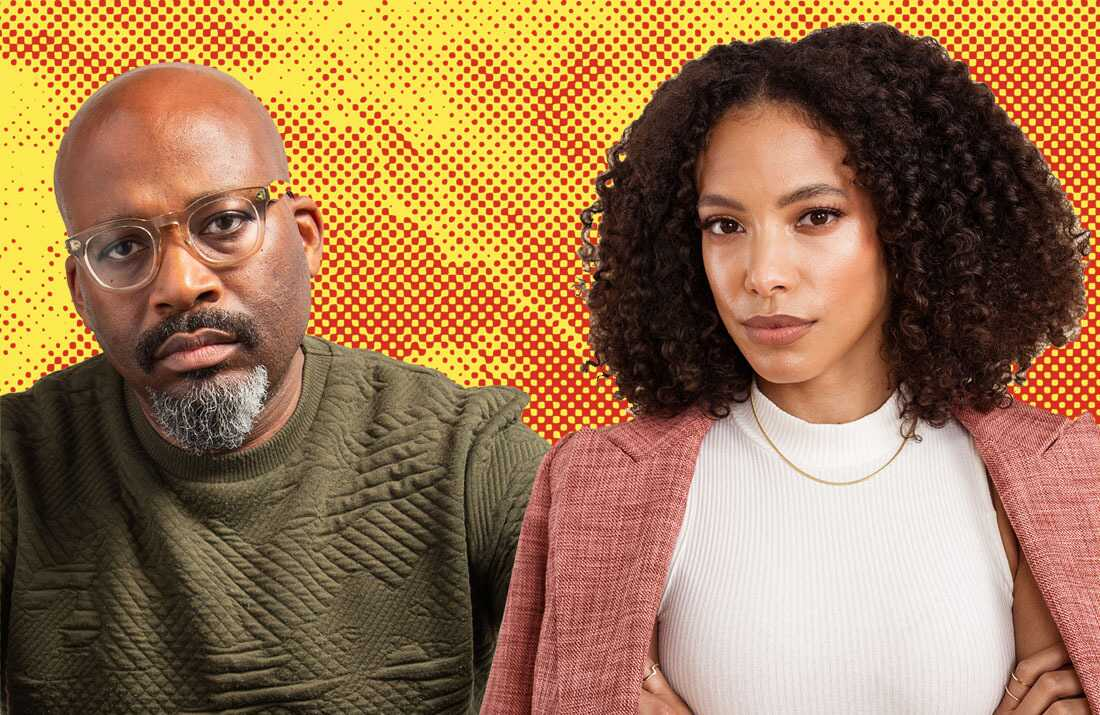
Louder Than a Riot hosts Rodney Carmichael and Sidney Madden.Louder Than a Riot hosts Rodney Carmichael and Sidney Madden.Christian Cody and Joshua Kissi/NPR, iStock
What do you think your superpower is, and how has that informed your involvement with Girls Write Now?
I think my superpower is listening. Listening and caring, which sound like little things. But in the grand scheme, a lot of people do not really listen to each other, and a lot of people don’t care now. There is a high level of individualism and apathy that the world is operating on, specifically in the creative space. But I think as a journalist, you have to be a good listener, you have to be inquisitive. You have to look for what people are not saying, or what they’re saying between the lines. And when it comes to how I like to deploy that superpower with Girls Write Now, it’s being the mentor who can allow someone who’s just starting out in their journey to be heard and understood.
Philosophers describe soul hunger as a deep, spiritual longing/craving for something meaningful. Can you describe how your soul is feeling right now?
When it comes to creative writing, journalism, storytelling, I feel we’re in a very precarious place with media and storytelling, and so I would say it feels kind of unmoored. I think the foundations that I grew up with, and a lot of the rules that I grew up on, are dissolving or changing in real time. So I think we’re collectively going through growing pains. I feel a bit without a foundation sometimes, but I find that the only way out of that feeling is to just go through, so to keep myself curious, keep myself inspired, keep myself busy. But in the midst of that, I always remember what I can control, which is myself and my own instincts and my own storytelling abilities.
Who inspires you?
My mother inspires me. She was the only person in her family growing up in Jamaica, who decided to go to college and not go to the UK, but go to America. In Jamaica, as a former British territory and colony, the pipeline to go to the UK from Jamaica is so established and strong. That’s a safe path. She decided to go to America, and she decided to study engineering and so many things in her life were just moments where she had to disrupt the path and change her trajectory over and over. And she did it, and she did it with the deep belief in herself and just the belief that she deserved better, and she wanted to make the world better.
I love how you talk about music as this greater cause than just being music— it’s also this social record for challenges that people have been through, and a tool for advocacy. So I think that’s very clear in your work, but I still want to ask, what cause are you passionate about? And why?
I’m passionate about a lot of causes, but I think the line of the common denominator is, I’m really passionate about culture and cultural preservation and equity. Being on the music beat for so long, I’ve honed my angle and my eye to it, to show how it is actually a vessel for identity, culture, freedom fighting, and all these things. And so I do notice, even when I’m not covering a musical act, I’m always trying to investigate, what is the power tension here? How can someone who’s historically been maligned or underserved, how can their voice be heard? Where’s the power shift happening, who’s in power and who is being disempowered, culturally speaking? I mean, it’s so funny. Growing up in America, you’re told you’re a minority—and this comes with having immigrant parents, this comes with a worldview having the privilege to travel somewhere outside of the US—you realize, you’re so much more of the majority, and your traditions, your music, your cuisine, your style, is all imbued with this deep sense of belonging and inherited “juice,” you know what I mean? But growing up in a place where so many minorities have been disenfranchised, it’s almost like you’re brainwashed to believe, any expression of your culture is such a big thing when it’s actually just innate within you. I think about that a lot. I think about the power dynamics of that, and how little expressions of culture, food, fashion, marital traditions, or definitely the music in every sense, how it’s always a revolution within itself.
What is the most important lesson that you’ve learned from a difficult experience?
I think professionally speaking, one of the lessons I’ve learned a few times over is, you need to have your own Guiding Light be very strong. You need to know, because right now in journalism, the line of integrity is just being blurred over and over. You need to have a very strong sense of what your mission is, and who your social contract is with when you’re doing this work…. I’ve also learned over and over, virality can come and go, but impact, that’s what’s going to stay a lot longer. But sometimes real impact, lasting impact, comes from doing the work, taking the long road, going slowly sometimes, and building up slowly. So that’s a lesson I’ve been reminded of many times.
This [next] question was something that I’ve been thinking about ever since I looked into your work in the first place, specifically with Louder Than a Riot… I grew up listening to a lot of hip-hop, from my parents—they were raised here, and just me being in New York City, of course. Another prevailing genre that I grew up with is rock music. And after listening to your podcast, I was really considering how hip-hop and rock, these two genres are serving as these massive political tools for advocacy, but only hip-hop has been severely misinterpreted through history. So I want to know, how has that played out for you personally? How has hip-hop served as a political manifesto in your life, and how does it empower your work covering social advocacy?
Honestly, I think for me, you said it really well right there; it being a vehicle of political advocacy, even though it’s not thought of that way, or it’s just starting to be thought of that way, that’s always been a light bulb moment for me. There are many other genres that represent that type of activism, whether you’re talking about folk music or rock music, punk, disco, all of that. Even jazz back in the day, it’s literally a disruption, and it’s a language of, I think we said in the first episode, it’s the language of the unheard, of the oppressed. Because hip-hop is one of those relatively still young genres that really came from nothing. It came from having a complete lack of resources. And the energy of “find a way,” or “make a way,” or “we’re gonna make something out of nothing,” is just so strong and so imbued in hip-hop, and so that’s why it has that energy of activism baked right in.
Like you, a lot of the work that I’m passionate about or interested in is my cultural background. I think being Asian-American has always been in the periphery of what I care about. Especially having immigrant parents, and now going to a PWI (predominantly white institution) in the Midwest, it’s been a huge culture shift. I’ve been more involved in spaces where it’s pretty unconventional to see someone like me reporting on genres in which my community hasn’t exactly been visible. How did you find your way as a woman of color through the music and entertainment industry, and what’s your advice for someone like us to find their way?
That question resonates with me so much. To be honest, I think I’m still finding my way. Working, first and foremost, post-grad in hip-hop journalism, it wasn’t about being the only Black woman in the room, but it was definitely about being the only woman in the room, or few and far between. And just not having enough opportunities to connect with other women who were working in the industry at the time, and honestly, being brainwashed to think there can only be one woman on this masthead, or just the competition that is socialized into you, which is really lame. I went to a PWI as well, Hofstra University. So finding spaces where I didn’t have to perform or code switch, or be on defense was super important for me very early. And I think I’ve looked for that over and over in every space I’ve occupied. And I also looked at, what are spaces that I can occupy, that I can bring more people into? If I am going to be the first, I am not going to be the last, and I’m not going to be the only. We’re going to hire more people who look like me, represent what I do, or represent a different version of that.
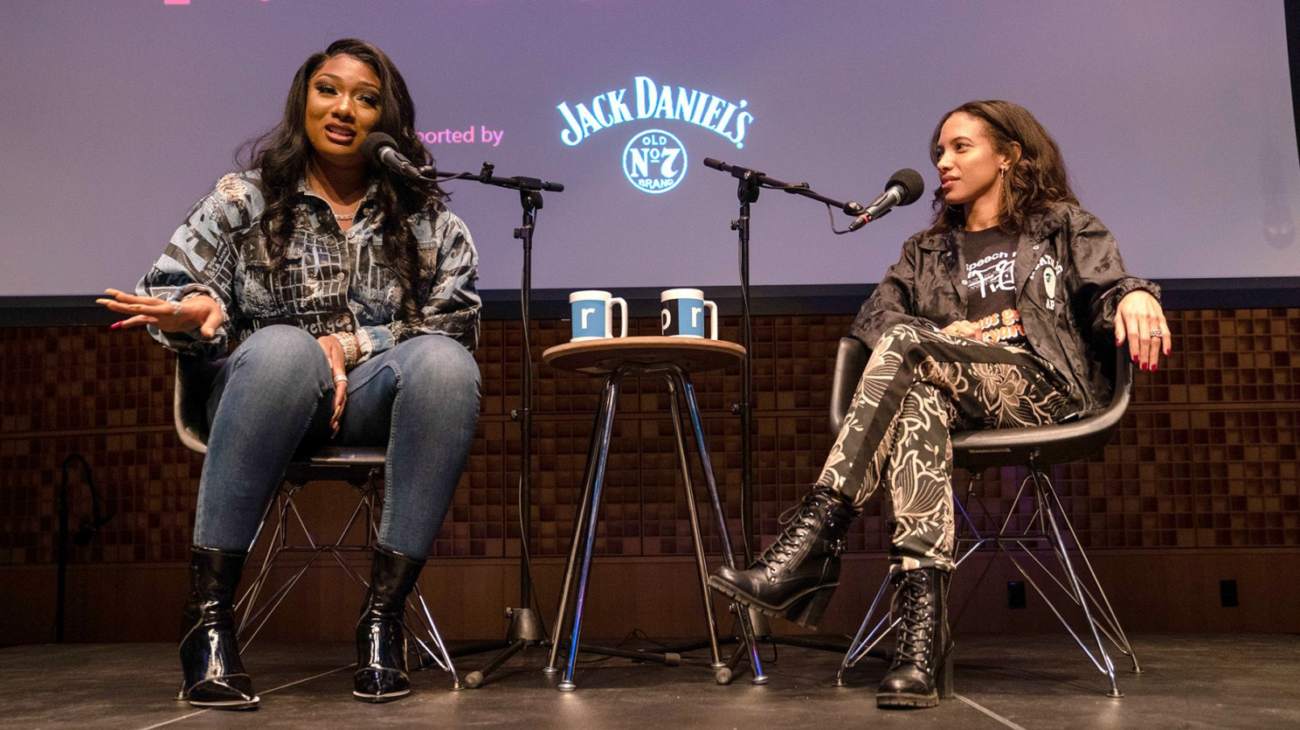
Sidney Madden (right) interviews rapper Megan Thee Stallion at NPR’s Tiny Desk Fest in 2019. Photo by Laura Beltran Villamizat/NPR
How did you get into your position at NPR, what helped and what didn’t work out?
When I started at NPR in 2017, there was a real emphasis on boosting hip-hop coverage at NPR Music, so they reached out to me and wanted to add me to the team. I started there as an editor, and my job as an editor was to kind of pitch stories for digital, but also to digitize music interviews that happen on NPR flagship shows…. And then, speaking of Tiny Desk, when I first started there, there was not much hip-hop or R&B programmed and scheduled to produce there. So I saw that as an opportunity for growth, an opportunity for curation, and an opportunity to get honestly, just selfishly, to get more artists I love in the building, and see them perform, and just share their art with more people. I started producing Tiny Desk in 2018, and Tiny Desk has been around for way longer than it’s been this big touchstone, in a popular way. I produced Tom Misch, Jorja Smith, Tyler, The Creator, Raveena, Ne-Yo, Bas. I started just producing because I saw the lane, I saw the opportunity. And I think that’s one thing that I had to learn with time. If you’re able to identify a need that is not being filled, and you have the free time, the gumption, the connections, and the work ethic to fill it, you should definitely do it.
What music have you been listening to recently?
I’m working on a piece about 2016 and Summer 2016, so I’ve been listening to a lot of 2016 albums. Blonde, Lemonade, 99.9%, KAYTRANADA’S debut. I just did a cover story with Lila Iké, the reggae artist, so I was listening to a lot of her, and some newer artists that don’t have a huge presence on streaming platforms, but people I’m very interested in, like Sobah, another reggae artist, or ERISTHEPLANET, who’s really starting to pop off and blow up here. Other than that, it’s honestly classic archival material.