The most challenging part of writing is sitting down and doing it…Marya Cohn’s Life@GWN

In the 2026 Spring Cycle of the Girls Write Now Collaboratory, mentees in the Art of the Profile Journey learned the nuts and bolts of journalism, feature writing, and interviewing from Girls Write Now teaching artist and award-winning broadcaster, podcast producer, and narrative executive Christabel Nsiah-Buadi. To put their new tools to the test, they submitted a profile of a member of the Girls Write Now community to Life@GWN. These are the stories of Girls Write Now, by Girls Write Now.
A Profile by Genesis Juarez | Spring 2026 GWN Cycle
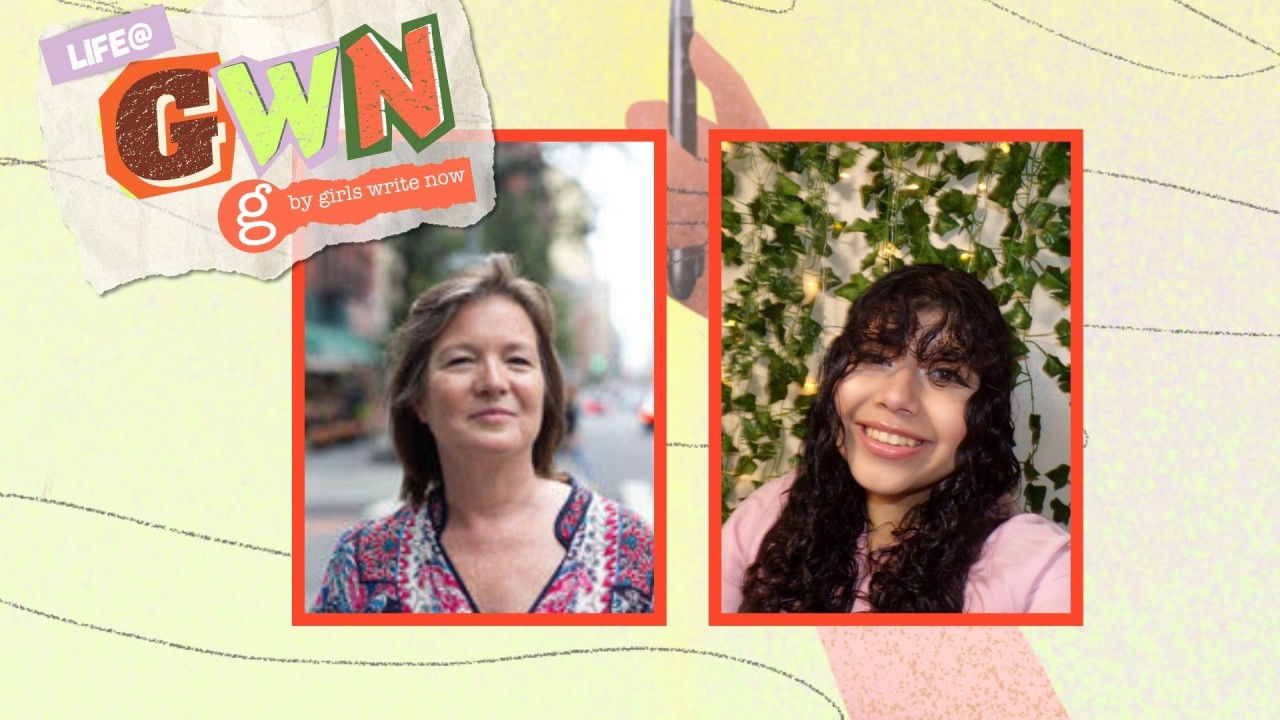
As Marya Cohn’s most recent mentee with Girls Write Now, I’ve had the privilege of getting an even clearer glimpse of her life and journey through a personal interview. Marya and I are both interested in Scriptwriting. She has delved into her passion deeply as an award-winning writer/director of films such as The Girl in the Book, starring Emily Van Camp, and Michael Nyqvist, and, now, teaches as a professor at The New School. Creative writers, directors, and people dedicated to wanting to better the world inspire her. Luckily, there is no shortage of those at Girls Write Now.
Having joined in its early years in New York City, Marya has seen Girls Write Now’s incredible growth; from being strictly in-person to a place curated for all, nationwide. The transition into the digital space made it possible for a mentee from a small town in Texas (me) to be paired with a screenwriter in New York City! Despite the distance and time differences, we’ve been able to stay connected through three journey cycles.
But Marya had two mentees before me. During the interview, I was curious about her previous mentees. I asked her to describe them so I could get a vision in my head of who she’s taught before. I craved to know whether I was like them and if I was living up to her expectations that she had set before, to which she expressed that they were all “bright young women, who proved that a new generation of women writers was bound to come,” and, in the same breath, included me as part of that new generation.
Being a part of the next generation of writers was like my new superpower.
Marya’s superpower is being open and staying connected with everyone within the organization. In her own words, she considers her top strengths as being intelligent, aware, empathetic, kind, and creative. But, during the interview, she also expressed that “our strengths are also our weaknesses.”
Upon hearing this statement, I immediately agreed because I believed much of our hardest critiques come from how we display our top strengths. The more I write, the more I’m aware of every flaw. It discourages me from continuing to write, even if it is just the first draft. But Marya has taught me not to stop, because looking at the final draft versus your first draft proves how far you’ve come.
One way Marya incorporates that philosophy of writing and creativity into her daily life is to just write. “The most challenging part of writing is sitting down and doing it… By sitting down, things will arrive. The thing about sitting down is that it’s hard.”
Not only that, but she has mixed feelings about workshops because, although writers need to receive feedback, “by getting so much feedback, you could lose your voice.” Marya suggests looking at the “note beneath the note,” meaning, looking at the area of the work the reader flagged, but maybe not fixing the problem they saw with it, but seeing what you see in it. This approach helps hone in on what’s best for your work and the vision that you’ve curated, not someone else’s.
To Marya, writing is a heightened way of showing the human condition. Through writing, we can express our humanity, whether by showing a bit of the author’s life or channeling the humanity around us. It’s human nature to use aspects from everyday life in our writing, because “your life experience is filtered through your writing.”
Much of what Marya writes is based on parts of life she can’t forget. There are few moments Marya has been shaped by. To her, being raised by a nanny helped her develop the ability to connect with people from different backgrounds and live with grace. If time travel existed, she’d want to go back to the first days with her first child, who is now 24 studying political economy in the Netherlands, while her second child is 22 and is an aspiring comedian.
After hearing this advice, what I wanted to know most was what part of a story she begins with when she writes and why. Typically, she starts with character and world. Then the very beginning of the story is next, because she usually already knows what the climax is and where she’s heading. Though, just like it happens for many other writers, things typically change, “and then they change, and then they change.”