For CeeCee Fresh
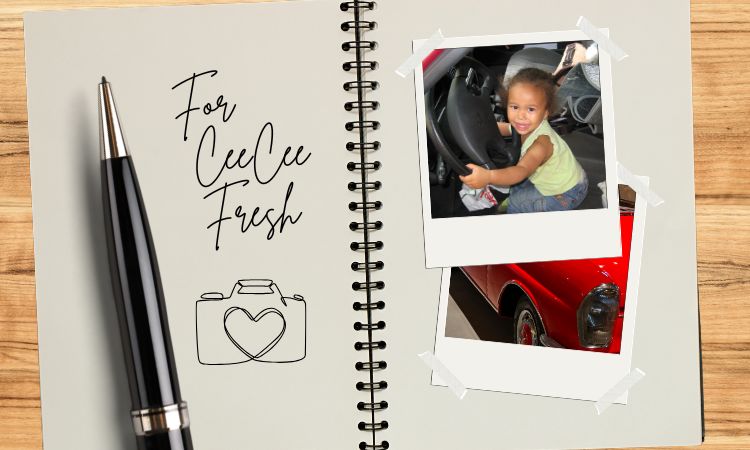

As I step into a new chapter, I reflect on the love and sacrifices that carried me here—told through the story of CeeCee Fresh, a car passed down by generations of women in my family.
I have always had this vivid image of my grandmother living in my mind. In it, her hands grip the soft steering wheel of our bright red car. Her wrists are draped in layers of powdery perfume, and her lips lined in a matte red as she yells profanities in Spanish at the other drivers. Her name was Maria, but I have only ever referred to her as abuelita. When I was younger, I didn’t think of her as often as I do now; not because I loved her any less, but because the older I get, the more I appreciate the weight of her sacrifices for my mother, and by extension, for me.
My mother was 17 when my abuelita sent her to New York to attend college, knowing that due to economic hardship, opportunities to meet again would be few and far between. I never got the chance to meet my abuelita and see her brown eyes in mine, or recognize her smile lines on my cheeks. Now, as I plan for my college education, I find myself constantly thinking about what it means for me to leave home. My abuelita stays close in my heart, reminding me that as I move towards the future that she prayed for, I must remember my roots and honor her by working to uplift others just as she did.
All of us—my abuelita, my mom, and I—are connected through the only possession we three have ever shared: a cherry-colored 1994 Nissan Sentra special edition two-door sedan that has survived collisions, a growing child, and both New York City and Ciudad Juarez, Chihuahua, Mexico. Just after my mother left home in the early 90s, there had been a spike in femicide in Juarez. So even though she was completely broke, scared, and alone in Manhattan, my mother could not let her own mother risk her life every day by taking a bus to work. She cobbled together enough money to buy a car for my grandmother, and it is the same red Sentra that I am fortunate enough to continue driving even now. Over the decades, my mom has paid for countless repairs to keep it going. For me, it has meant everything to have a tangible reminder of my mother and grandmother’s selfless love for one another.
By the time she had turned eleven, my abuelita dropped out of school to support her family by cleaning houses. Sending my mom off to college was her greatest pride. Inspired by the women in my family who persevered in the face of many barriers, I strive to take advantage of every opportunity while finding ways to give back. For the past two years, I have been a mentee in the Girls Write Now program, which works to elevate young women across the globe through writing. In collaboration with them, I have developed my own nonprofit, the Liminal Photography Project, providing free portraiture photography to families facing grave challenges or experiencing major life transitions. At its highest level, the work is rooted in fostering connection, inclusivity, and empowerment. I firmly believe that all people deserve to celebrate and document their lives.
As I move toward a future few women in my family could have dreamed of, I think about my abuelita gripping the wheel of my old car, driving forward. I will live my life loving as fiercely as she did, working to care for my family and helping other people along the way. In college, I plan to study history to gain a deeper understanding of how knowledge of the past can be used to build greater equity in the future. Before that, on the day I graduate from high school, as I walk across the stage in my red cap and gown, my mom will surely be in the crowd loudly screaming my name, and abuelita will be right there with us.
Process
The most meaningful part of this process was exploring my family history in connection to my future. Through conversations about my mother’s childhood, my grandmother’s life, and my own hopes for the next four years, I began to see myself as part of a much larger story. Along the way, I gained a deeper understanding of who I am and committed to moving forward with purpose—honoring the strength and legacy of the powerful women who came before me.