The Cracked Plate
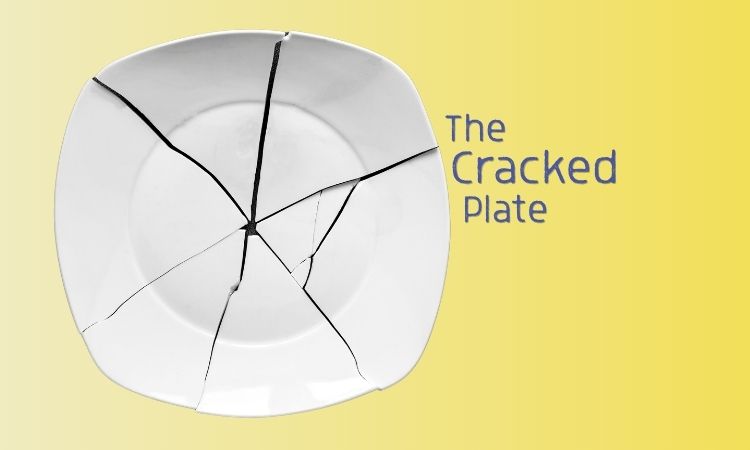

Inspired by I Am Not Your Perfect Mexican Daughter, this piece explores the quiet tension of growing up under high expectations. The plate is a metaphor—for memory, identity, and the cracks we carry.
“Some things hold fractures like a map, like a memory of how they were made.”
The plate sits on the table, barren, undecorated, the color of faded bone. It’s cracked at the edge, a slender line like the film of a spider’s web, almost invisible, but the light catches it now and then, sharp and unmissable. This plate has held a thousand meals, countless quiet moments, the scattered crumbs of mornings and evenings. It’s a weight pressed against my palms, a memory I’ve held too tightly, a thing left in a cupboard, holding silence.
Once, it was lifted high in pride, lifted up like a trophy, not for what it was but for how well it could hold. Laden, burdened—oh, it held. It held what was piled on by you without question, without pause, and smiled beneath its chipped enamel. Each crack, each fissure grew, turning fractures to veins, until it became a thing familiar to the broken.
I remember the way you’d drop it, not enough to break, just enough to show me that it could. It would skitter on the countertop, a faithless type of sound, before settling back into stillness. Each time, I was told it was my fault—the stain on the glaze, the fork mark, the clumsy scrape. The plate became something more than porcelain, more than the dust settling in its shallow bowl. It became a mirror of how you saw me: cracked, spoiled, an object for blame.
It didn’t start this way. I remember the early years, when my hands could barely carry it. You’d hand it to me, smiling, eyes warm, telling me not to drop it, to be careful with something so precious. Back then, I didn’t know what “precious” meant. I only knew the way your face softened, how it felt like a gift, like maybe you could see something in me that could one day be whole.
But years wear down softness. The years filled that plate with other things—disappointment, a few scalded meals, words that hung in the air like grease. It became something to hold with too much care, until the weight of it made my wrists ache. Sometimes you’d make me hold it out to you, just to see if my arms would shake. And if they did, I’d hear that quiet disapproval, that sharp little comment, that invisible crack widening, again and again.
One night, I held the plate a little too hard, pressing my fingers against its edge as if I could leave a mark there, as if it could take some part of me with it. And maybe it did, in a way I couldn’t see then. I held it, wishing it would break, thinking that maybe the pieces could be swept up, carried away, forgotten like the crumbs after dinner.
There were also nights the plate was scrubbed too hard, scoured in the name of something better left unnamed. Watched, ever watched, for how it might shine, for a glint that might redeem its fragile surface, for a gleam that could wash away all faults and sins that were perceived by you. Yet no amount of scrubbing could rid it of those tiny webs creeping through— with its delicate splinters beneath its skin.
You never let anything go. Each chip, each tiny crack, you saw them all. Like my flaws, you knew exactly where to press, where to grind your thumb against the fault lines until they deepened. “Look at what you did,” you’d say, as if I had willed those cracks into being. As if the fractures in the porcelain were in the shape of me, spread out for all to see.
Now the plate sits in my cupboard, gathering dust and memories, echoes of old arguments that sound like slammed drawers and too-long silences. I could throw it out, let it shatter at last, watch the pieces fan across the floor like scattered bones. But I don’t. I keep it, because it is mine now, because I have learned to hold it differently.
I look at that ever present crack, barely there, and think of all the ways I, too, am barely there, but still here. The plate sits, unchanged but deeply changed. No longer whole, not quite broken. It lives in the cupboard’s shadows, far from the gleam of newer, shinier things. Hidden but never discarded, too damaged to display, yet too loved to release. A thing kept for what it once was, or for what it should have been.
It reminds me that some things don’t break all at once. Some things hold fractures like a map, like a memory of how they were made. And some things survive, chipped, worn, and unfinished, but still whole enough.
Process
This prose poem was born from reflection—on literature, on girlhood, and on the unspoken challenges of a mother-daughter relationship. Reading I Am Not Your Perfect Mexican Daughter stirred something personal in me. While my mother has always been loving and supportive, she was also strict and deeply confirming of certain expectations as I grew up. I recognized myself in the book’s themes: the weight of being “good enough,” the quiet ache of not quite fitting into the mold you’re handed.
The plate in this piece became a metaphor as I wrote—a vessel for memory, hurt, endurance. I let the image of it guide the emotional arc. I wanted the language to feel tender and heavy at once, like the plate itself. It is my hope that this piece connects with readers who’ve felt those subtle fractures in identity, who’ve been shaped by what they were asked to carry, and who are learning, still, how to hold themselves gently.