“I would hope that I make people feel like they could go for their dreams…” Jocelynn Landon’s Life@GWN
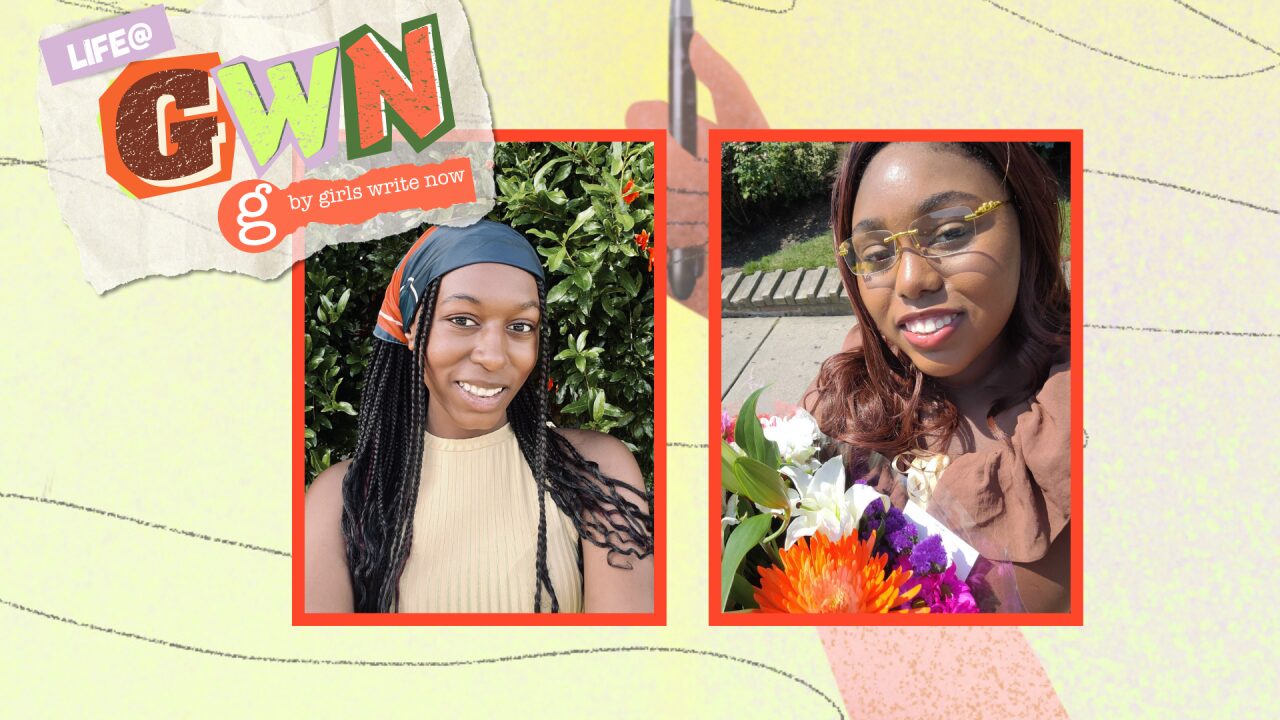

A Profile by Fayonna Jean-Philippe | Spring 2026 GWN Cycle
In the 2026 Spring Cycle of the Girls Write Now Collaboratory, mentees in the Art of the Profile Journey learned the nuts and bolts of journalism, feature writing, and interviewing from Girls Write Now teaching artist and award-winning broadcaster, podcast producer, and narrative executive Christabel Nsiah-Buadi. To put their new tools to the test, they submitted a profile of a member of the Girls Write Now community to Life@GWN. These are the stories of Girls Write Now, by Girls Write Now.
Some people enter a room already certain of themselves. Others arrive carrying questions, then slowly become the answer.
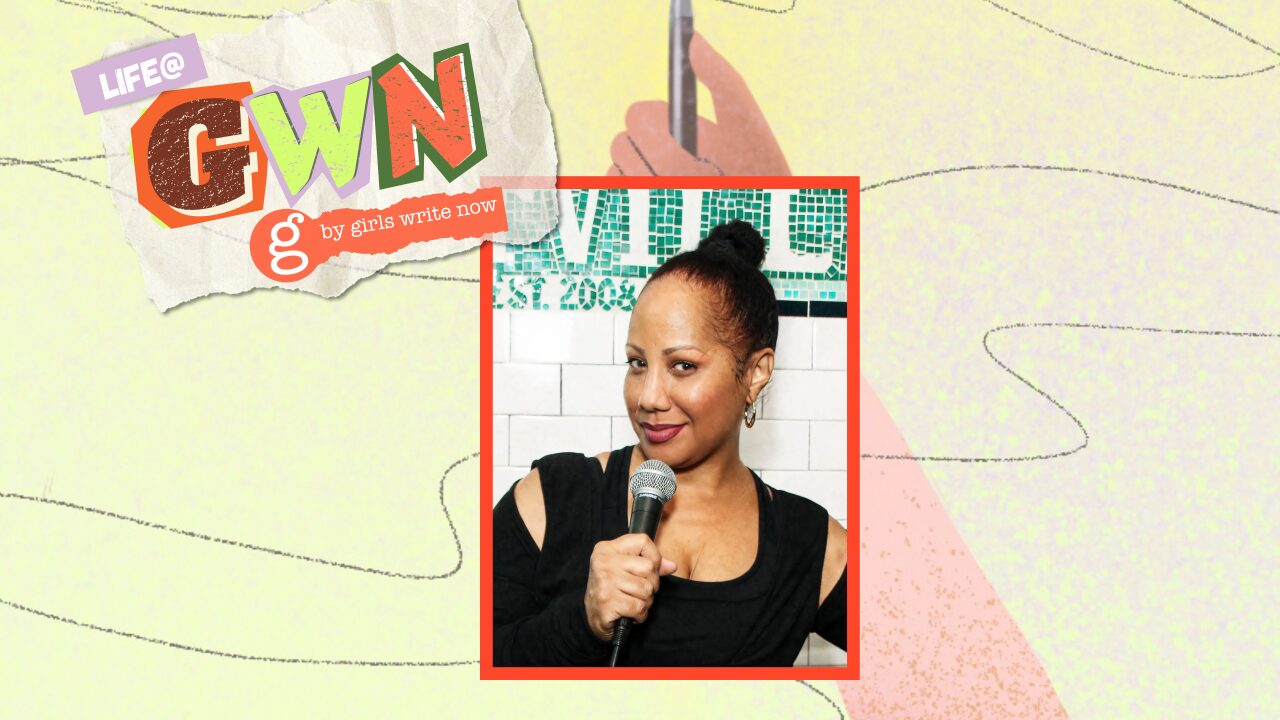
Jocelynn Landon built her relationship to storytelling through conversation. A former journalist, now community liaison and book editor with 916 Ink, Jocelynn brings that same instinct for connection into her Community Studio at Girls Write Now, where she explores pop culture, creativity, and the power of shared learning.
When Jocelynn Landon introduces herself, she does so plainly, without spectacle: “Hi, I’m Jocelynn. I am currently a mentee with Girls Write Now, and I’m part of the Teach GWN Journey.” It is the kind of sentence that seems simple until you understand what sits beneath it: the search for belonging, the return to language after feeling lost, the quiet bravery of choosing community again.
For Jocelynn, writing has never been only about writing. It is also about people. About being in rooms where curiosity is mutual and ideas are passed back and forth like notes under a classroom desk. “Yeah, I feel like it’s really cool to have a space with so many other people who are like-minded individuals,” she says. In the Girls Write Now community, she found not only instruction but recognition.
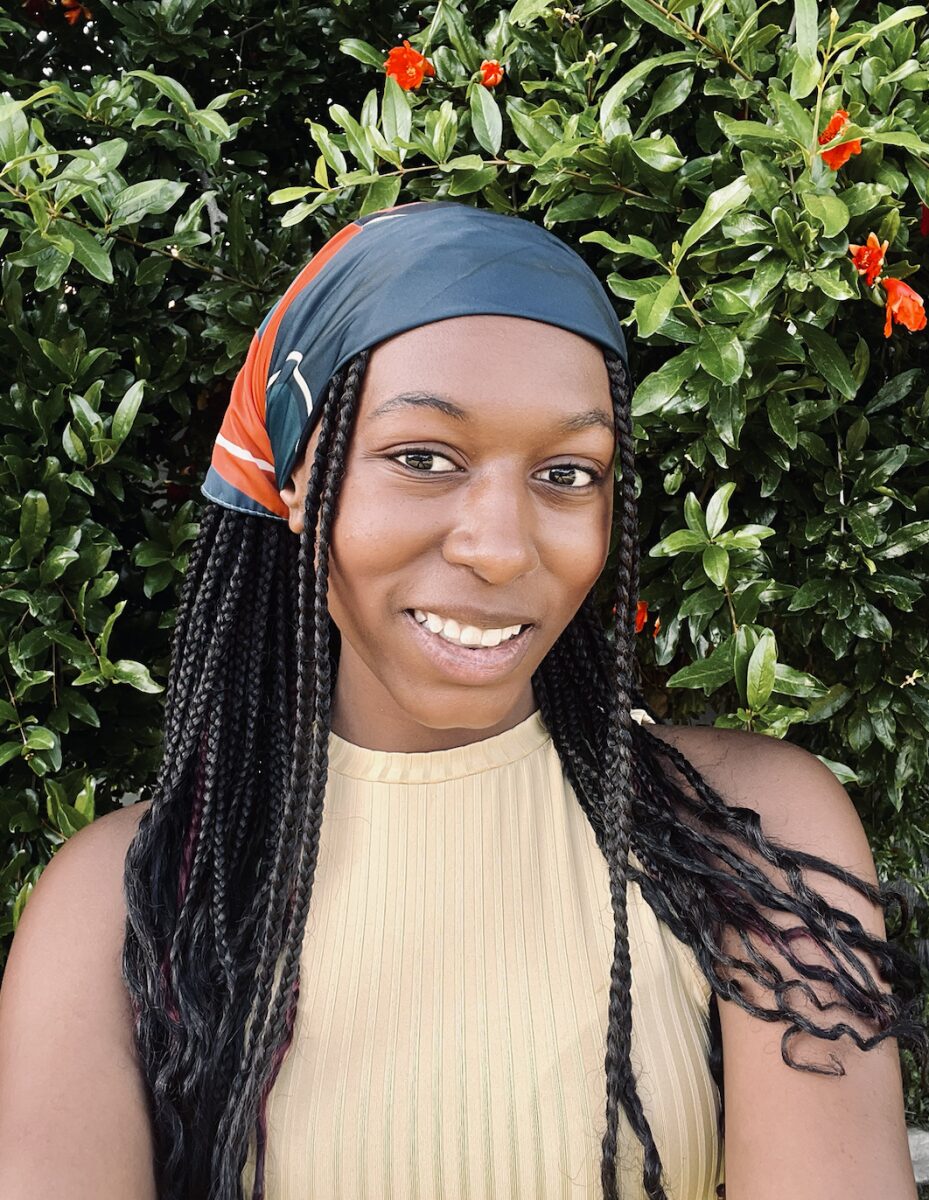
There is a specific loneliness that can arrive after graduation: the sudden absence of shared purpose, the feeling that everyone else kept moving while you misplaced the map. Jocelynn knows this feeling well. “During college, I studied journalism, and I felt a little lost [post-grad].” Her confession lands gently, but its honesty lingers. Lostness is rarely dramatic. More often, it is quiet. It sounds like wondering if the thing that once animated you still belongs to you.
Girls Write Now became a way back.
“Coming back and being able to be around so many people who are into so many different things within writing has been really special.”
Jocelynn’s return to writing has been fostered by friends and mentors. Even when discussing her own gifts, she frames them in relational terms. “I would say my superpower is being kind of outgoing and… communicative. I love just talking to people and encouraging them.”
Some people think charisma is volume. Jocelynn understands it differently. To be outgoing, in her case, means making room. It means inviting perspectives, asking questions, and noticing what lights someone else up. In Jocelynn’s Community Studio“Pop culture: How Passion can become a Profession”—that instinct has found a home. “I love to hear different people’s perspectives,” she says. “And so I feel like that kind of ties in perfectly.”
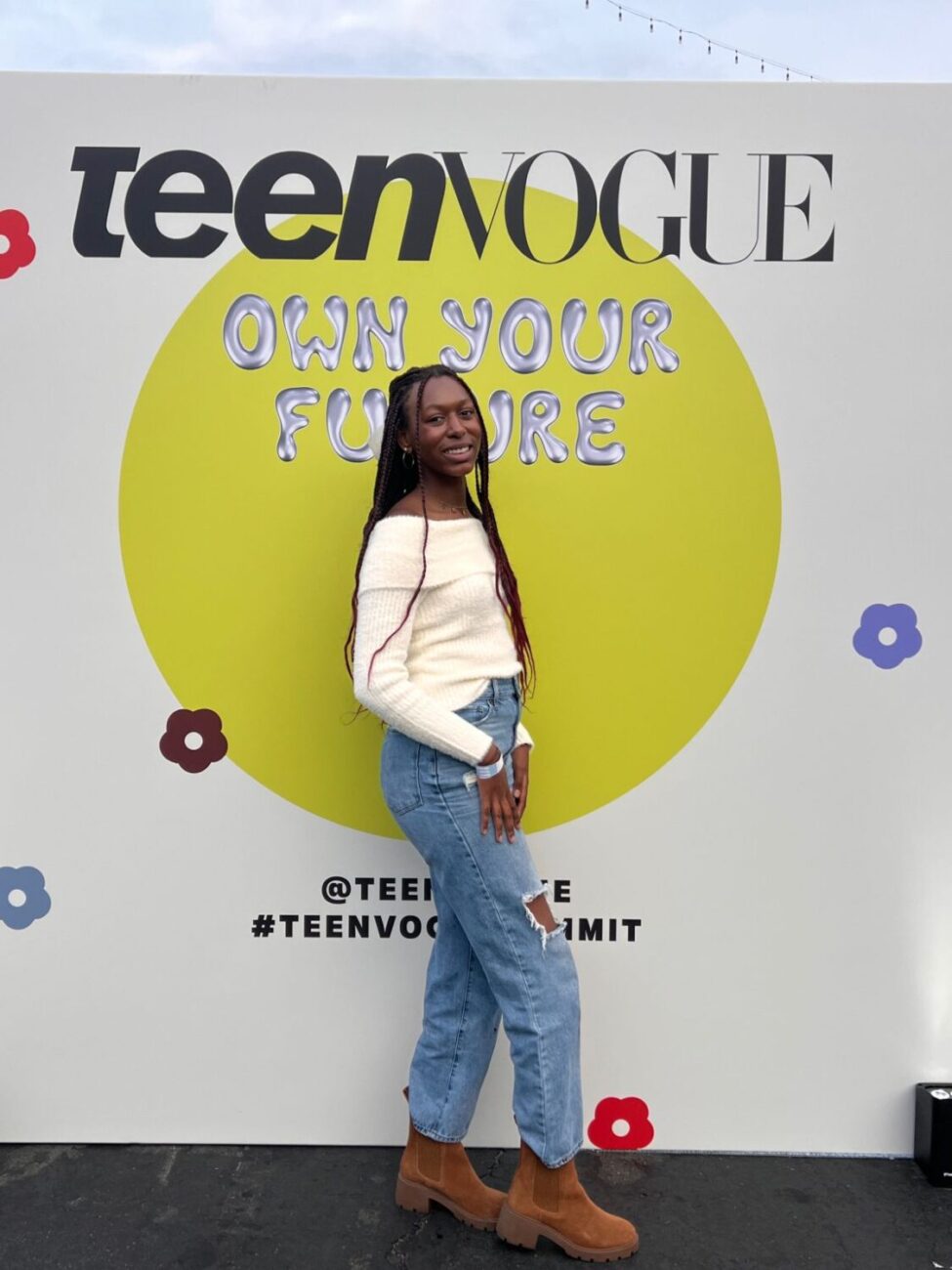
If confidence is one of her gifts, vulnerability is one of her truths.
She journals nearly every day, though she shrugs off the grandeur of it. “I kind of just talk about my life.” Writing, for her, remains personal terrain. “It’s hard to put my work out there. So, slowly but surely, work on doing that.”
There is something tender in hearing a person who clearly values stories still admit fear around sharing her own. It is a reminder that courage is not the absence of hesitation. It is movement with hesitation intact.
When asked about the most important lesson she has learned from difficulty, her answer arrives in fragments, then sharpens into conviction. “I think my biggest lesson is to believe in myself… Let someone else tell you no, but I think you should always tell yourself yes.”
She remembers attending a local program connected to an equity board, listening to people from an underserved community speak about their lives. “That was the first time that I was like, Oh, writing matters.”
Not writing as self-expression alone. Writing as amplification. Writing as witness. Writing as a bridge between who is speaking and who has never been asked to listen.
That same ethic guides how she thinks about reporting. When asked how she avoids turning pain into something consumable, her answer is immediate and deeply humane.
“Just understanding that not everything has to be put in the story.”
She recalls interviewing survivors during Domestic Violence Awareness Month, moments where the recorder was paused so conversation could become care. “We just paused the conversation, and we talked; they opened up, then we went back on the record.”
The distinction matters. There is what belongs to the article and what belongs to the person. Jocelynn knows the difference.
And yet even in speaking of limits, Jocelynn returns to relationship as a remedy. Friends who listened. Conversations that held her.
Who inspires her? Not icons, but ordinary people in motion. “I think it’s so cool to wake up and see things that people are doing all around the world.” Her friends, especially. “I think my friends are some of the coolest people.”
It makes sense that someone so animated by others would imagine her own legacy in the language of encouragement.
“I would hope that I make people feel like they could go for their dreams… I hope that people, when they meet me, are like, oh my gosh, this girl believes in me.”
This may be the clearest portrait of Jocelynn available: a woman who wants belief to be contagious.
Not every writer wants to be seen. Some want to make seeing easier for everyone else.
In a culture that rewards certainty, Jocelynn offers something gentler and perhaps rarer: enthusiasm without ego, honesty without performance, ambition spacious enough to include others.
And already, she knows one thing many people take years to learn: Tell yourself yes first.