“For me, making do isn’t just about food; it’s also about making do in life”… Kardea Brown’s Life@GWN
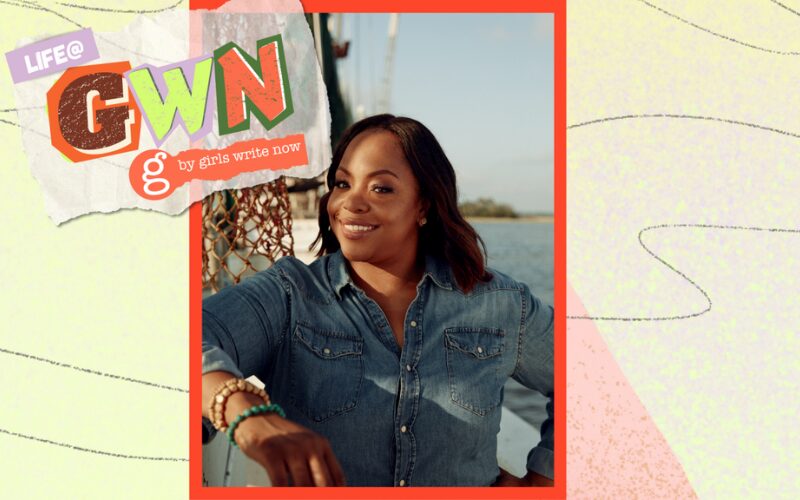
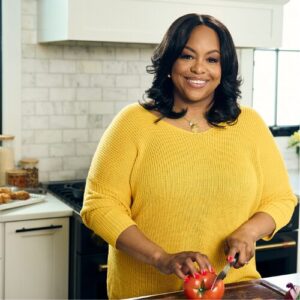
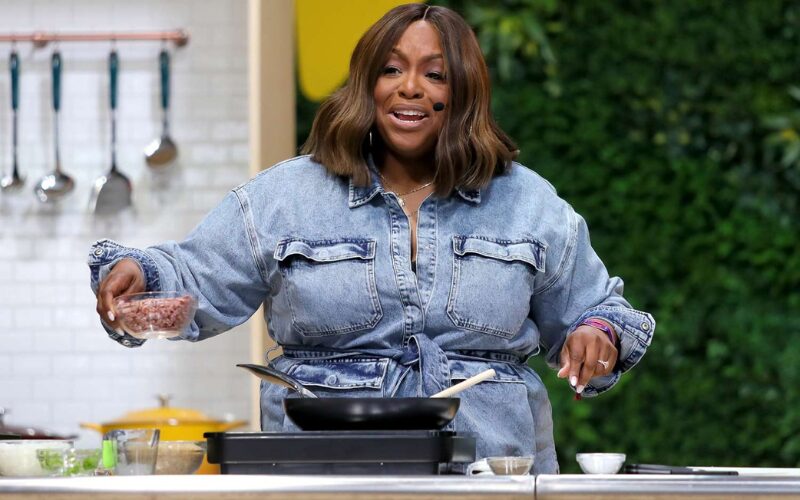
We are proud to honor Chef Kardea Brown at the Girls Write Now Awards, and excited to share with you a must-read interview that is not only inspiring, it’s going to have you thinking about food, cooking, recipes, and the power of community in a whole new light. After premiering her cooking show Delicious Miss Brown on the Food Network in 2019, she’s reached 3.5 million viewers, judged Chopped, and authored her first cookbook The Way Home. Now, she’s coming off the heels of her second cookbook Make Do With What You Have, which will be released by Amistad Books in November.
In Make Do With What You Have, Kardea’s 100 recipes are more than meals. They evoke a history of making the most of what’s available. From Kardea’s great grandfather’s hand-made fishnets to the Food Network stove, Kardea talks us through the legacy of food in her family, and the lessons learned through cooking and writing.
Kardea also talks about how mentoring makes a difference, reflecting a core element of the Girls Write Now ethos: “Coming into this world of culinary arts and cooking and being on TV, I had no one around me doing anything remotely like this, so talking to mentors helped me navigate this world.” Sound familiar? On Community: “I couldn’t do this by myself. There’s always a community of people behind you, supporting you.”
It’s like she’s always been a member of the Girls Write Now community.
Hi Kardea! Could you please introduce yourself to the Girls Write Now community and tell us a little bit about your path to this latest book, Make Do With What You Have, and your process for writing it?
I am Chef Kardea Brown of the Food Network. My show is called Delicious Miss Brown, and I am also the host of Kids Baking Championship. I am the honorary judge on many baking shows, and thrilled to celebrate my newest cookbook, Make Do with What You Have. I remember Patrick Bass from HarperCollins and Amistad reaching out to me two years ago, saying they would love to do another book. The Way Home was an instant success, and we were in talks about a new cookbook and what it would look like. I remember getting a lot of emails, and I still do to this day, just saying how people love that my food is approachable, affordable, and that after they watch my show, they can just go to the pantry or to the fridge, just pick out an item, and make exactly what I just made. That was the beginning of how this book came together.
To your point, in this current moment where food is definitely not super affordable, tell us a little bit more about why you think it’s important that food be accessible?
I value my target audience, where the food that I cook is not for everyone; I get that. Every day, I reach average people looking to eat satisfying meals that are great for their families or for a single person who may not have to cook bulk dinners, so it was important for me to again make meals, dishes, and recipes that are based on the people that enjoy the type of food I cook. It’s realizing that with the prices of things, everyone is in this “struggle” together as far as what’s happening in our world.
We’re curious to know more about the southern influences behind your food. The Girls Write Now Community loves food (we produced a whole zine about it!) and appreciates the connections between food, family, and culture. We know you grew up in South Carolina, and then found your way to the New York, New Jersey area. Depending on what region you are from, foods look very different.
I grew up within the Gullah Geechee community. We are direct descendants of enslaved West African people; I grew up on the Sea Islands of South Carolina. There’s a lot of people who don’t know there’s a cluster of sea islands off the coast of South Carolina, that’s where my family’s from. My family comes from Guatemala Island, Edisto Island, and Johns Island. I grew up around very fresh seafood, so for us, shrimp was like chicken is to the average American. For us, seafood was very much a staple ingredient. So, my style of Southern food is still very Southern, mixed with the Gullah Geechee influence.
Maybe this is just the northerner in me, but it’s so funny how I think seafood tends to be associated with wealth, especially in the States. Lobster used to be the poor man’s food. Then wealthy people discovered it, and now it’s considered high-end. But what you’ve been describing is that, in that environment, these “higher-end ingredients” were about “making do” and using the resources around you. Do you have any thoughts on that?
My grandmother’s father made fishing nets by hand, so living on the Sea Islands and not having access to a standard grocery store or anything, a lot of the foods that they ate were things that they caught and grew. My great-grandfather made a living by making these nets by hand with the back of a sharpened spoon and netting material. He would sit under this big oak tree in his yard and hand-make nets for people of the community. Once those nets are made, you can go out to the creek. That’s where we get shrimp from. They call them Creek shrimp, and it is very different. I brag about our Lowcountry seafood here in Charleston; it is just some of the sweetest, best shrimp you’ve ever had in your life. It’s meaty and delicious. That’s how I’ve always known shrimp. Until I started going to other places and I was like, “this is what you guys eat? This is shrimp? Why, you gotta come to Charleston! You have no idea how shrimp tastes.”
Can you tell us a bit about your recipe development, and give an example or two? How long does it take for you to develop a recipe?
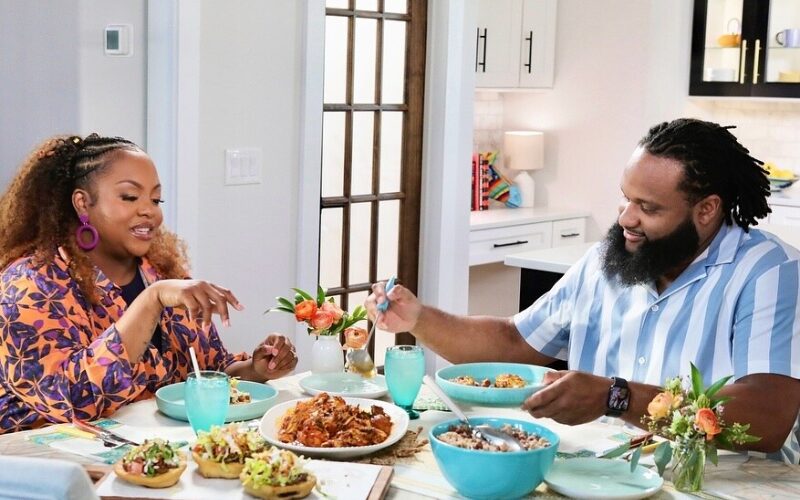
It’s so funny. I actually don’t do your traditional type of recipe development because I’m constantly cooking. I use what I cook daily for my husband and for social media as my gauge for whether something would work really well in a book or even on my show. I like to use it as a test. So, I cook every day. I wake up and think, What do I have a taste for? Normally, I stick with things already in my home and freezer because we go grocery shopping quite often, and try not to limit our trips to the supermarket.
That’s how I get ideas and develop recipes—usually based on what we’re in the mood for. If I post something on social media and it gets a lot of buzz, I track that and keep those recipes on hand. Then, I use them later, whether it’s for my book or my show.
You’ve talked a little bit about making do when times are tough. Do you have any advice for people who are going through your cookbook, about applying that perspective to life?
I’m a firm believer not only in speaking things into existence but also in writing them down, because the very act of writing is a form of energy. I believe that when the things that come through your mind go through your mouth and onto paper, you’re essentially rooting (as in planting deeply) whatever it is that you want into the universe. For me, the act of writing is very, very special. I recall working at Big Brothers Big Sisters from 2014 to 2015, and writing in my journal. I think I still have that journal, actually. I remember writing, “I’m going to be a Food Network star. I am going to be a household name. I am going to have my own show. I am going to be successful. I am going to write a cookbook.” This was in 2014.
At the time, I was a young 20-something woman, looking around and not physically seeing what I was writing about, but I created this vision in my head of what I wanted. I knew that the only way to really actualize it wasn’t just through talking, but through writing—and then also by doing, because you have to put action behind those prayers and affirmations.
Being so intentional about saying things, and starting those affirmations and statements with “I am,” because when you do that, you’re affirming that it is already so.
That’s why I’m such a firm believer in writing those things down—you have to see it. Using that form of energy helps you really manifest the things you want in your life.
For me, making do isn’t just about food; it’s also about making do in life.
Our 2025 anthology is titled Hope Lives in Our Words. In this time in a precarious world, when you feel overwhelmed by everything, what makes you feel hopeful?
I think because I’ve been through a lot in life, I still consider myself fairly young, though I’m getting up there! Because I’ve seen so much, I know that bad times don’t last forever. One thing I’ve learned about life is that things are always changing. There are seasons to everything, and even though some seasons might not be the best, they’re there for a reason.
I know that bad times don’t last forever… You’re going through that season for a purpose. So, for me, giving myself hope is about remembering that I’ve been through rough and uncertain times before, and I’ve come out of them stronger, even better. Holding onto that tiny mustard seed of hope and faith is how I keep hope alive.
It might sound cliché, but it’s really how I keep hope at the forefront of my mind when things feel uncertain. I know I’ve been through challenges before, and things always change. There’s always a silver lining, or that rainbow after the storm.
It can get tough, and you can lose your way, and community is so important. I am thrilled to be a part of the Girls Write Now community and to be honored at the Awards. When I got the email, I was like “Oh My Gosh, this is awesome.”
Kardea, what are your parting words?
It’s a blessing to do what I do, and I hope I can be a service, especially to young girls in this space, in the culinary universe, and beyond. It’s so important, especially in the African American community, to write down your stories and your recipes. So many of our voices have been silenced. We’re losing the Matriarch role for future generations, and I’m thankful my grandmother is alive and helped me shape and mold my career. I was the first in my family to write down my collection of recipes, to outlive my legacy. Future generations will thank us for it. That’s kind of how I think about it—bad times don’t last forever. They just don’t.
Kardea Brown is a contemporary Southern Chef, author of the New York Times bestseller The Way Home, and the creator…
Visit Profile